
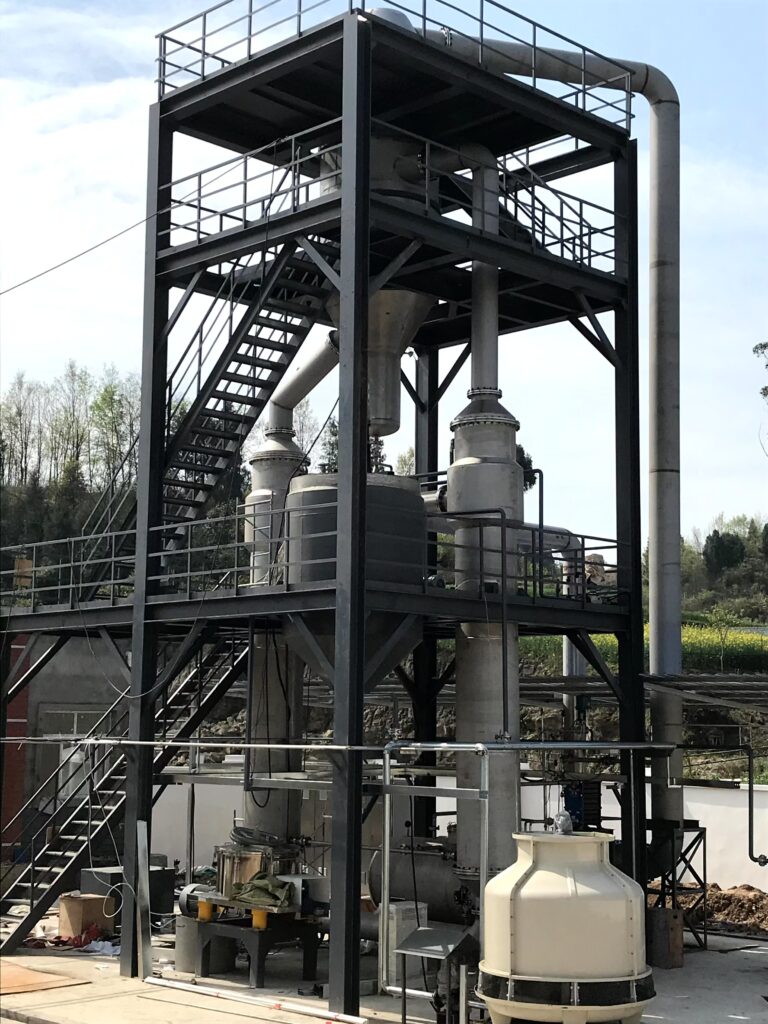
Treating high‑salt wastewater poses unique challenges: aggressive corrosion, scaling, and high energy demands often drive up operating costs. However, a single effect evaporator can offer a practical and economical solution for concentrating and reducing brine volumes—making it an attractive choice for industries such as petrochemicals, mining, and desalination pre‑treatment.
1. Exceptional Corrosion Resistance
High‑salt streams can rapidly degrade ordinary metals. To withstand this environment, single‑effect evaporators are commonly fabricated from:
- 316L stainless steel or higher‑grade alloys
- Titanium or Hastelloy® for extreme chloride concentrations
This material selection prevents premature wear, extends service life, and minimizes unplanned downtime.
2. Simplified Design and Maintenance
Unlike multi‑effect systems, a single‑effect evaporator uses one heating stage, resulting in:
- Fewer components (no inter‑stage pumps or vapor recompression units)
- Easier cleaning protocols to remove salt scale—often via simple CIP (Clean‑In‑Place)
- Accessible heat exchanger surfaces that reduce maintenance time
This simplicity translates into lower labor costs and faster turnaround between batches.
3. High Salt Tolerance and Scale Management
Scaling is a major concern when salts exceed their solubility limits. Single‑effect units address this by:
- Operating under vacuum to lower boiling points and reduce salt crystallization on heating surfaces
- Forced‑circulation or falling‑film configurations that keep flow velocities high, discouraging scale buildup
- Periodic blowdown cycles to evacuate concentrated brine before excessive solids form
These measures maintain steady heat transfer and prevent sudden fouling-related shutdowns.
4. Flexible Energy Integration
While multi‑effect evaporators offer lower steam consumption per unit water evaporated, single‑effect systems provide:
- Compatibility with low‑pressure steam or waste heat sources
- Ease of retrofitting into existing steam networks without major upgrades
- Option for thermal vapor recompression (TVR) add‑ons if higher efficiency is later desired
This flexibility is crucial for plants seeking to optimize energy use without large capital expenditures.
5. Cost-Effective Brine Volume Reduction
By concentrating high‑salt wastewater by up to 80–90%, single‑effect evaporators significantly reduce:
- Transportation and disposal fees for hazardous brine
- Evaporative pond usage and associated land costs
- Chemical treatment requirements downstream
In many applications, the reduced volume alone delivers rapid payback on equipment investment.
Conclusion
When it comes to high‑salt wastewater treatment, the single effect evaporator stands out for its robust materials, straightforward maintenance, and adaptable energy options. Whether you’re in petrochemicals, mining, or desalination, incorporating a single‑effect evaporator can streamline your brine management—improving uptime, cutting costs, and ensuring regulatory compliance.