
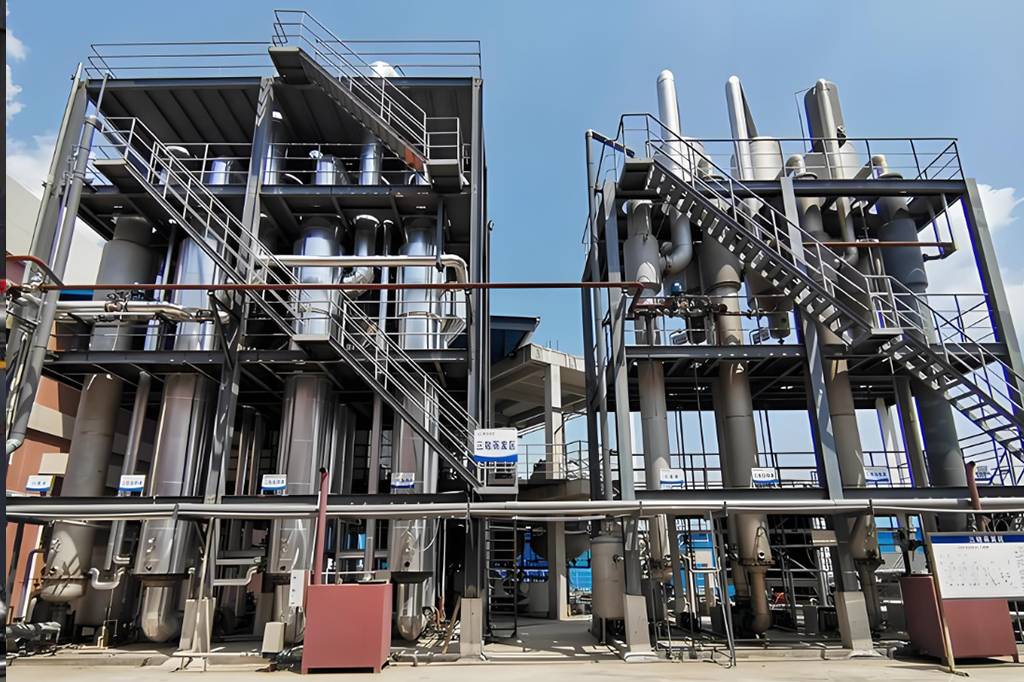
A triple-effect evaporator is a sophisticated system designed to concentrate solutions by utilizing multiple stages of evaporation. In this setup, the vapor produced in one stage serves as the heating medium for the next, thereby maximizing energy efficiency. This cascading use of energy allows for the evaporation of a larger volume of liquid with a reduced amount of steam input.
Key Benefits of Triple-Effect Evaporators
1. Significant Energy Savings
By reusing steam across multiple stages, triple-effect evaporators drastically reduce the amount of fresh steam required for the evaporation process. This not only lowers energy consumption but also translates into substantial cost savings over time.
2. Lower Carbon Footprint
The reduction in energy usage directly correlates with a decrease in greenhouse gas emissions. For instance, advancements in evaporator technology have led to systems that can cut CO₂ emissions by up to 100% compared to conventional methods. This makes triple-effect evaporators a pivotal component in achieving sustainability goals.
3. Enhanced Operational Efficiency
These systems are designed for continuous operation, minimizing downtime and maintenance needs. Their efficient design ensures a consistent and reliable concentration process, which is crucial for industries requiring high-quality outputs.
Applications Across Industries
Triple-effect evaporators are versatile and find applications in various sectors:
- Food and Beverage: Concentrating fruit juices and dairy products.
- Pharmaceuticals: Processing active ingredients and extracts.
- Chemical Manufacturing: Concentrating chemical solutions and recovering solvents.
- Wastewater Treatment: Reducing effluent volumes and enabling water reuse.
In each of these applications, the adoption of triple-effect evaporators leads to improved efficiency and sustainability.
Considerations for Implementation
While the benefits are clear, it’s essential to consider the following when implementing a triple-effect evaporator system:
- Initial Investment: The upfront cost may be higher than single-effect systems, but the long-term savings often justify the investment.
- System Design: Proper design and integration with existing processes are crucial to maximize efficiency gains.
- Maintenance: Regular maintenance ensures optimal performance and extends the system’s lifespan.
Conclusion
Adopting an eco-efficient triple-effect evaporator system is a strategic move for industries aiming to reduce operational costs and minimize their environmental impact. By leveraging advanced technology, companies can achieve significant energy savings, lower emissions, and enhance overall operational efficiency. As global emphasis on sustainability intensifies, integrating such systems positions businesses at the forefront of environmentally responsible manufacturing.