
In many industrial settings, concentration of solutions is a routine—but often challenging—step. Whether you’re removing water from a chemical mix, concentrating a food-grade extract, or treating wastewater, the process needs to be efficient, reliable and cost-effective. That’s where a triple-effect evaporator system (TEES) comes in. If you haven’t considered one yet, now may be a good time: this technology can simplify what was once a complex, energy‐intensive task.
What is a Triple-Effect Evaporator System?
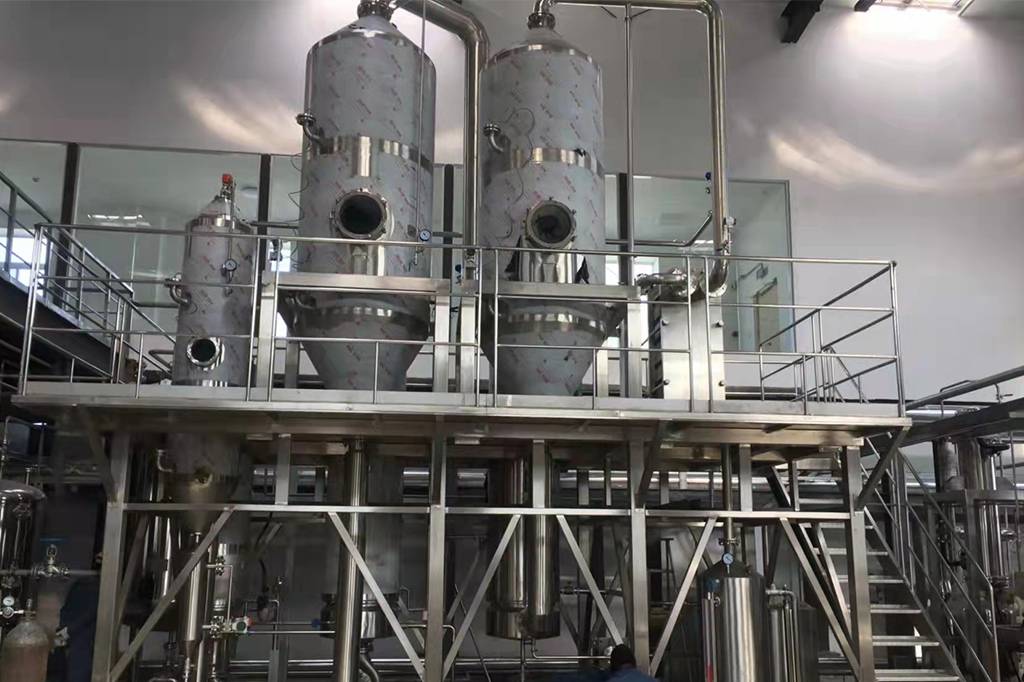
A triple-effect evaporator is essentially a series of three evaporative “effects” or stages, arranged so that the vapour (steam) from one stage becomes the heating source for the next. In the first effect you supply fresh steam; then the vapour produced is reused in the second effect; and then again in the third. That cascade of energy usage lets you extract more water (or solvent) per unit of fresh steam.
In practical terms: feed enters effect 1, gets heated, evaporates a portion; the condensed steam from effect 1 becomes the heating medium for effect 2; and so on. With the pressure and boiling point lowered at each subsequent stage, the system harnesses energy that would otherwise be wasted.
Why It Matters: Key Benefits for Industry
- Energy Efficiency
Because you reuse the latent heat of vapour from previous effects, you dramatically reduce fresh steam consumption. For instance, it’s noted that triple‐effect systems may consume around 0.37-0.46 tons of steam per ton of water evaporated under optimal design. - Cost Savings
Less steam means lower fuel or utility bills, reduced heat loss, and fewer external heating demands. Over time those savings add up—and make the capital investment more attractive. - Higher Concentration Levels
With multiple stages, you can achieve greater concentration (or solvent removal) in a more compact system than using separate single‐effect units. This means less footprint, less equipment, and simpler piping. - Improved Product Quality & Process Control
Because you can operate subsequent effects at lower temperatures (thanks to the cascade), heat‐sensitive materials can be processed more gently—less risk of degradation, color changes, or unwanted chemistry. - Better Environmental Footprint
Reduced energy usage means lower emissions, less waste of thermal energy, and improved sustainability metrics. In a world where industrial processes are increasingly judged by carbon creds and resource efficiency, that matters.
When to Use a Triple-Effect Evaporator (and When to Be Cautious)
Good fit:
- Processes where a large volume of low‐to‐moderate concentration feed needs reduction.
- Industries such as chemicals, pharmaceuticals, food & beverage, wastewater treatment where heat recovery is desirable. For example: liquid food extracts, sugar syrups, chemical salts recovery.
- Applications where operating costs (steam/fuel) dominate, so savings pay off over time.
Cautions / design considerations:
- Feed with heavy fouling/sedimentation may need more cleaning or special design—because fouling reduces heat transfer and negates efficiency gains.
- Capital cost is higher than a single effect, so you need to ensure your throughput, feed characteristics, and lifecycle cost justify the investment.
- The complexity of controls, pumps, vacuum, piping and staging must be managed. Poor design undermines the benefit.
How to Make Your Process Simpler With It
1. Match your feed and duty to the system
Start by quantifying how much water (or solvent) you need to remove, the feed temperature, solids content, viscosity, fouling potential and allowable final concentration. From there, select the triple‐effect configuration accordingly.
2. Choose the right flow path
Triple‐effect systems can be configured in forward‐feed, backward‐feed or parallel feed arrangements. For example, forward feed (feed flows in same direction as steam) may give better energy efficiency; backward feed (feed flows opposite to steam) may be preferred for lower fouling or heat‐sensitive products.
3. Monitor and maintain for heat‐transfer integrity
Regular cleaning, avoiding scale buildup, ensuring vacuum performance (for lower boiling temperatures), and controlling film thickness are all key. A dirty system erodes the advantage of the triple effect.
4. Leverage the vapour wisely
Plan the condensate recovery and vapour reuse from the first and second effects into the next. The more you can reuse heat, the more you simplify external steam demand and support sustainable operations.
5. Communicate the value in your messaging
For marketing or export (as in your company’s case), highlight the simplified process, energy savings, reliability and lower TCO (total cost of ownership). Present data: e.g., “~40% less steam per ton of water removed” or “Lower electrical / fuel cost by X%”. Provide assurance: “Designed for continuous operation, minimal downtime, easy cleaning”.
If your export business or production setup involves large‐scale concentration tasks (whether in chemicals, stainless steel pickling waste, food concentrates, etc.), then investing in a triple‐effect evaporator system is a smart move. It shifts complexity from needing huge steam boilers, extra equipment and high operational cost to a streamlined, efficient, well‐engineered solution.