
Factories everywhere—from chemical and food processing plants to wastewater treatment facilities—are under constant pressure to do more with less. That’s where the Triple-Effect Evaporator steps in, quietly transforming how industries handle concentration and evaporation processes.
What Makes a Triple-Effect Evaporator Different?
If you’ve worked with single-effect or double-effect evaporators before, you already know how the system reuses heat from steam to reduce energy consumption.
A triple-effect design takes this concept one step further — literally. It uses three stages (or “effects”) of evaporation, where the vapor produced in one stage becomes the heating source for the next.
In simple terms, it’s like using the same unit of energy three times instead of once.
The result? Up to 50–60% savings in steam consumption and significantly higher throughput, all without compromising the concentration level or product quality.
More Output, Same Energy Bill
Let’s take a real-world example.
A food ingredient factory that switched from a single-effect to a triple-effect evaporator didn’t increase its boiler capacity at all. Yet, its daily output nearly doubled. The system made better use of each kilogram of steam, reducing waste heat loss and optimizing temperature gradients across stages.
This efficient heat reuse also means less cooling water is needed — another hidden cost saver that many plants overlook.
In industries where every kilowatt-hour counts, this can make the difference between struggling with margins and achieving healthy profitability.
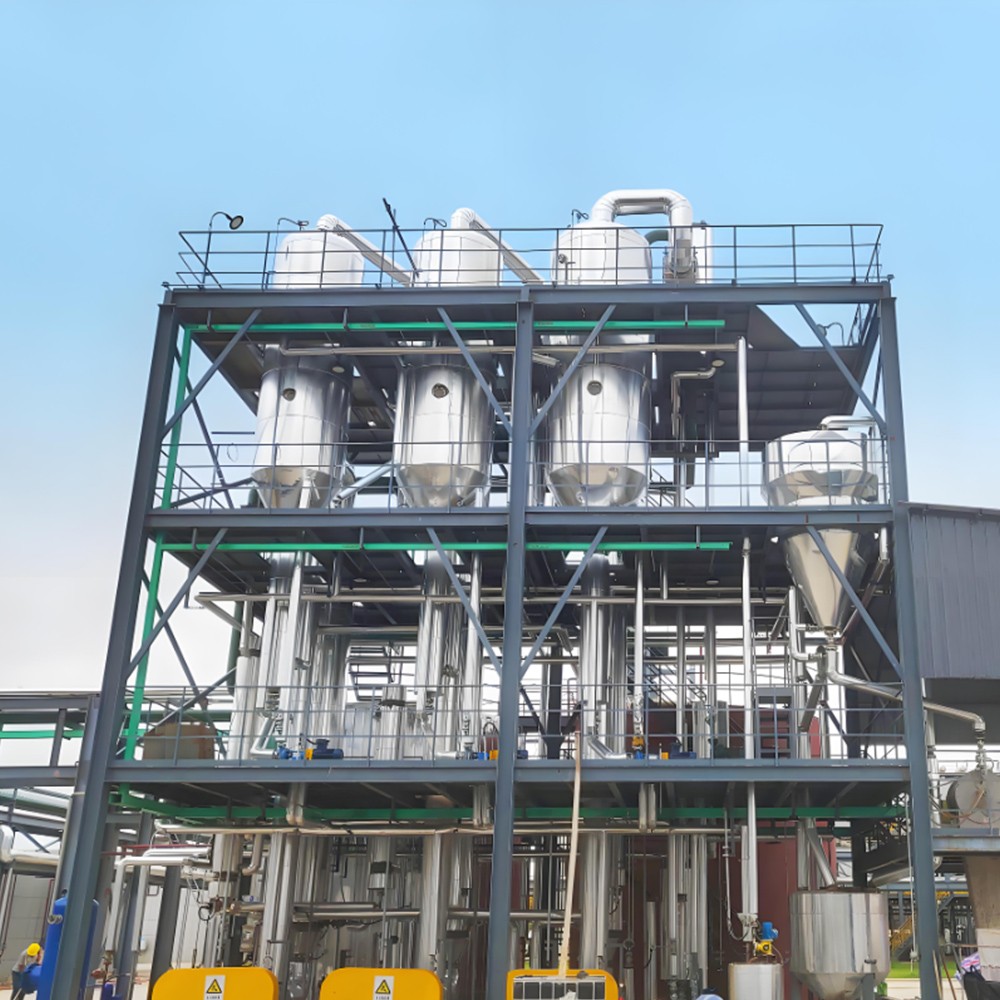
Why It Matters for Global Manufacturers
For companies exporting food, pharmaceuticals, or chemicals, energy costs are a major factor in total production cost. A triple-effect evaporator doesn’t just reduce operating expenses — it helps achieve a more stable and predictable production cost structure.
Even better, this technology aligns perfectly with modern sustainability goals.
Reducing steam and water usage directly lowers carbon emissions, helping manufacturers meet environmental standards and build a greener brand image — something buyers in Europe and North America are increasingly paying attention to.
Customization: The Secret to Maximum Efficiency
Of course, not every triple-effect evaporator performs the same.
The key is custom engineering.
When the evaporator is properly designed for the feed material — whether that’s sugar solution, pharmaceutical extract, or industrial wastewater — the performance difference can be huge.
Factors like boiling point elevation, viscosity, and heat sensitivity all determine the best temperature and pressure balance between effects. That’s why many leading plants now choose customized triple-effect systems, built precisely for their process requirements.
Smarter Investment for Long-Term Savings
It’s true that a triple-effect evaporator involves a higher upfront investment compared to a single-effect model.
But when you consider the ongoing energy savings, longer lifespan, and higher product recovery, the return on investment often comes within 1–2 years.
From there on, every production cycle adds to your profit margin — not your energy bill.
In a world where raw materials and energy prices fluctuate, efficiency is the best insurance policy a factory can have.
Final Thoughts
A triple-effect evaporator isn’t just an upgrade — it’s a strategic move toward sustainable, high-output production.
It helps plants meet modern energy standards, reduce operating costs, and improve process reliability.
Whether you’re concentrating fruit juice, recovering solvents, or treating wastewater, choosing the right evaporation system can directly shape your plant’s performance and profitability.