
In laboratories and bioprocessing facilities, handling biological fluids—such as cell culture media, plasma, and enzyme solutions—demands extreme care, especially during solvent removal or concentration steps. A cryogenic evaporator offers a powerful solution, using ultra‑low temperatures and vacuum to gently evaporate volatile components while preserving sensitive biomolecules. But with various models and features on the market, how do you select the best unit for your application? Here’s a step‑by‑step guide.
1. Define Your Fluid Properties and Objectives
Start by cataloging your fluids’ key characteristics:
- Freezing point and thermal sensitivity: Many proteins, nucleic acids, or lipids degrade above certain temperatures.
- Viscosity and solids content: High viscosity fluids may require specialized flow paths.
- Target concentration or dryness level: Are you removing water to a specific volume, or drying fully to a powder?
- Batch size and throughput needs: Small R&D batches differ greatly from pilot or production volumes.
Clear objectives ensure you choose a cryogenic evaporator with the right capacity and feature set.
2. Look for Precise Temperature and Vacuum Control
Biological fluids often contain heat‑labile compounds. A top‑tier cryogenic evaporator will offer:
- Deep vacuum operation (down to <1 mbar) to lower boiling points dramatically
- Accurate temperature regulation, often via refrigerated condensers or liquid nitrogen cooling
- Gradual ramp‑down profiles to prevent sample “bumping” or splashing
These controls minimize thermal and mechanical stress on delicate biomolecules.
3. Assess Material Compatibility and Construction
Contact between your fluid and the evaporator surfaces must not introduce contamination or adsorption:
- 316L stainless steel and PTFE‑lined surfaces resist corrosion and extractables
- Food‑ or pharma‑grade seals and gaskets prevent leaching of unwanted polymers
- Smooth internal finishes facilitate cleaning and reduce sample loss
Verify that the manufacturer meets GMP or USP criteria if you’re in the pharmaceutical sector.
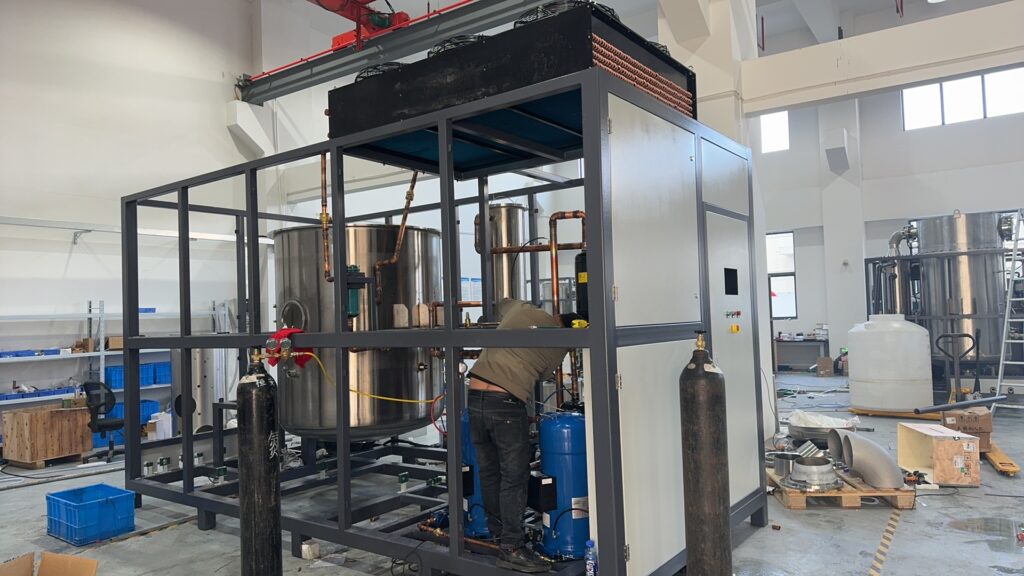
4. Evaluate Throughput, Footprint, and Scalability
Your chosen cryogenic evaporator should align with current and future workflow demands:
- Modular designs allow you to add capacity by linking multiple units
- Compact footprints save valuable bench or floor space
- Automated load‑sensing functions adapt cycle times to batch weight or moisture level
Balance immediate throughput with the ability to scale up as projects grow.
5. Examine Control Software and Data Logging
Reproducibility is critical in bio‑applications. Look for a system that provides:
- Recipe management: Store and recall precise evaporation profiles
- Real‑time monitoring of temperature, pressure, and residual moisture
- Secure data logging compliant with FDA 21 CFR Part 11 (if required)
This digital oversight ensures consistent results and simplifies regulatory audits.
6. Consider Maintenance, Service, and Support
An advanced evaporator is only as good as its uptime and support network:
- Easy‑access components for routine cleaning or part replacement
- Remote diagnostics to troubleshoot issues without on‑site visits
- Comprehensive training and certification programs from the vendor
Strong after‑sales care reduces downtime and protects your critical samples.
Conclusion
Selecting the right cryogenic evaporator for biological fluids hinges on understanding your sample characteristics, demanding precise temperature/vacuum control, ensuring material compatibility, and planning for future scalability. By following these guidelines, you’ll secure a gentle yet effective evaporative system that safeguards biomolecule integrity and streamlines your workflow.