
In the world of industrial thermal processing, choosing the right evaporation system is crucial to balancing performance, cost-efficiency, and product quality. While multi-effect evaporators offer energy-saving benefits, there are specific scenarios where a single effect evaporator shines—delivering reliable concentration performance without the complexity or high capital investment.
This article outlines the key application areas where single-effect evaporators are not only suitable but often preferred.
1. Small-Scale or Pilot-Scale Production
Single effect evaporators are particularly advantageous in settings that do not require continuous high-volume processing. For example:
- R&D laboratories
- Pilot plants for new product testing
- Small-batch specialty production
In these cases, a single effect system offers:
- Simpler controls
- Lower upfront and maintenance costs
- Fast setup and minimal operator training
It’s the ideal system when flexibility and budget-friendliness outweigh energy savings.
2. Heat-Sensitive Product Concentration
Certain products degrade rapidly when exposed to prolonged or excessive heat. Examples include:
- Fruit juices and purees
- Pharmaceutical extracts and syrups
- Herbal concentrates and bioactive compounds
A single effect evaporator can operate under vacuum conditions, lowering the boiling point and preventing thermal damage. This makes it an excellent solution for preserving color, flavor, nutritional value, or chemical integrity.
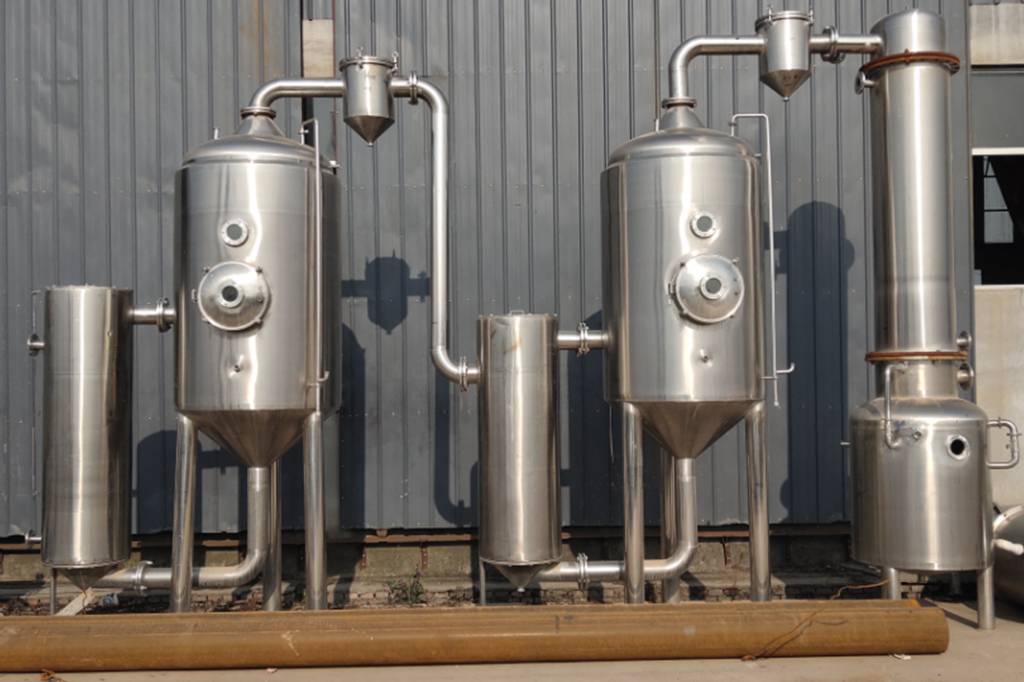
3. Processing of High-Fouling or Viscous Fluids
Some liquid materials tend to foul heat exchange surfaces or become increasingly viscous during evaporation, such as:
- Dairy products (e.g., whey concentrate)
- Protein solutions
- Wastewater with organic load
In these scenarios, a single effect evaporator equipped with forced circulation or falling film technology ensures proper heat transfer and reduces the risk of clogging. Cleaning and maintenance are also easier compared to complex multi-effect units.
4. Industries with Unstable or Intermittent Utility Supply
In some regions or factories, steam and electricity may not be available in consistent quantities or pressure. A single effect evaporator requires less utility coordination and can often be operated manually or with simple automation. This makes it suitable for:
- Remote manufacturing sites
- Developing industrial zones
- Facilities using auxiliary boilers
It’s a robust solution where consistency and resilience matter more than maximum efficiency.
5. Low Initial Investment Requirements
Startups, small producers, or businesses expanding into new product lines often face financial constraints. A single effect evaporator offers:
- Lower capital cost than multi-effect systems
- Simpler installation (fewer stages, no thermal vapor recompression)
- Faster ROI for moderate-throughput processes
In industries such as cosmetics, essential oils, and nutraceuticals, the simplicity of a single effect system often outweighs marginal energy savings.
6. Effluent and Wastewater Treatment
In chemical and pharmaceutical industries, evaporators are frequently used for reducing effluent volume or recovering solvents. A single effect evaporator is particularly suitable for:
- Concentrating chemical wastewater before disposal
- Evaporating low-boiling solvents for recycling
- Isolating valuable residues
The system’s compact size and operational flexibility make it ideal for batch or decentralized waste streams.
Conclusion: When Is a Single Effect Evaporator the Best Choice?
A single effect evaporator remains a workhorse in many industries due to its simple structure, easy operation, and adaptability to a wide range of applications. Whether you’re processing delicate food extracts, managing wastewater, or developing new formulations, this system delivers reliable performance without the high complexity of multi-stage alternatives.
If your process requires moderate capacity, quick changeovers, or cost-efficiency, the single effect evaporator is not just suitable—it’s ideal.