
When your manufacturing or processing plant is facing increasing utility costs, tighter sustainability targets and pressure to improve efficiency, choosing the right evaporation technology matters. The good news: the technology known as mechanical vapor recompression (MVR) offers a large leap forward in energy savings compared with traditional evaporation systems. Below we’ll walk through what happens in an MVR system, why it saves so much energy, and how it compares side-by-side with conventional systems — in plain language.
What happens inside an MVR evaporator
In a conventional evaporation system (for example single-effect or multi-effect steam-heated evaporators), you supply fresh steam or other heating medium. The feed liquid boils, generates vapour, that vapour is either condensed or vented, and the latent heat of that vapour is mostly lost. A good summary from one supplier says: “In conventional evaporation plants, the energy content of the vapor stream produced is either lost or only partially reused.”
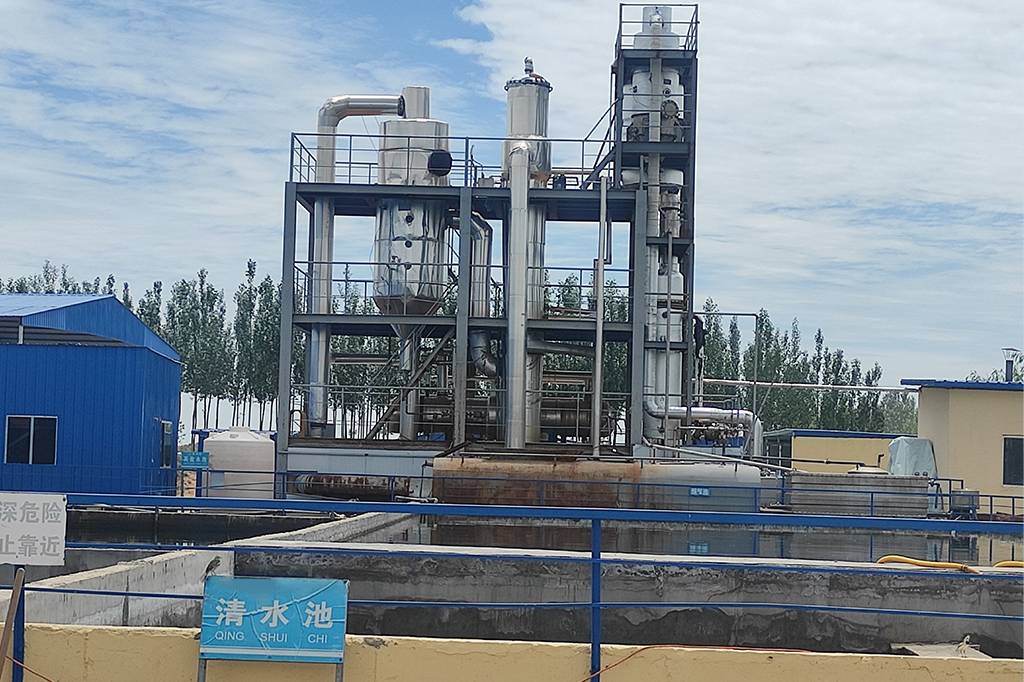
By contrast, an MVR evaporator captures the vapour, compresses it mechanically (thus raising its pressure and temperature), then uses that compressed vapour as the heating medium for further evaporation. In doing so you re-use the latent heat that would otherwise be wasted. The result: far less fresh energy input is needed.
Why this leads to big energy reductions
Several mechanisms contribute to the energy reduction:
- Recycling latent heat: Instead of dumping vapour energy, MVR uses it to heat the next stage.
- Reduced steam/thermal input: Many systems eliminate or dramatically reduce the need for live steam or fossil-fuel based heating. One modern MVR system claims up to 90-97% energy consumption reduction compared with a single-effect evaporator without recovery.
- Lower temperature differentials & efficient heat exchangers: Because the vapour is reused, the system can work at smaller temperature lifts, improved heat transfer, lower losses.
- Electric-driven compressor vs large boiler/fuel system: While the compressor uses electricity, the overall energy input is far smaller than what a boiler + steam + vent/condense system requires. One source states: “Instead of live steam, electric energy is used indirectly to heat the plant.”
Comparative snapshot: Traditional vs MVR
Here’s a clear table comparing typical energy metrics and considerations.
| System Type | Energy Input Source | Typical Energy Use / Savings | Key Advantages & Disadvantages |
|---|---|---|---|
| Single-Effect Evaporator (classical) | Live steam or fossil-fuel boiler | High: since vapour heat is largely lost. (Baseline) | Simple design but very high energy consumption |
| Multi-Effect Evaporator | Steam cascaded through multiple effects | Moderate: better reuse of vapor but still steam-based | Better than single, but still large footprint & cost |
| MVR Evaporator | Compressed vapour via mechanical compressor | Very low: energy reductions of ~80-90% or more reported. | Highest efficiency, lower steam demand, but higher CAPEX and requires good design/infrastructure |
Practical numbers & what you can expect
In one industry overview, MVR systems were credited with reducing energy consumption by up to 97% compared with single‐effect evaporators without recovery.
Another technical source states that traditional systems might use 0.3-1.0 tons of steam per ton of water evaporated (equivalent to 700-2,200 kWh of thermal energy) while an MVR system may reduce that significantly.

What to keep in mind when assessing the savings
- Electricity vs steam cost: While MVR uses mostly electricity, your regional cost of electricity vs steam/fuel matters. A low-cost steam region might change payback timelines.
- Compressor efficiency and system design: The design of the compressor, heat exchangers and piping layout influences how much of the latent heat you can realistically recover.
- Feed stream and process conditions: If the feed has heavy fouling, high viscosity, or needs large temperature lifts, the efficiency gains may be less than the best cases.
- Utility infrastructure: If you still need a large boiler or cooling system, ensure you don’t carry redundant systems. The full benefit shows when the plant is designed/modified holistically.
- CAPEX vs OPEX: MVR systems often require higher upfront investment, but the energy savings and reduced steam demand lead to operational cost savings and often quicker break-even.
If you’re exporting industrial evaporation equipment or supporting clients who do, this is a strong selling point: the energy savings from an MVR evaporator are not marginal — they can be game-changing. When you position the technology correctly (with credible numbers and realistic context) you help your potential customers see the value.