
As the demand for protein-rich products grows across the dairy, plant-based, and biotech industries, manufacturers face increasing pressure to optimize the concentration of protein solutions without damaging their structure or nutritional value. One of the most effective technologies for achieving this is the Falling Film Evaporator.
In this article, we explore the advantages, typical applications, and a real case study that showcases how falling film evaporators improve protein concentration performance.
Why Choose Falling Film Evaporators for Protein Concentration?
Protein-rich liquids such as whey, soy milk, pea protein, and fermentation broths are often sensitive to heat and prone to fouling. Falling film evaporators are ideal for handling these materials due to:
- Low residence time: Reduces thermal degradation of sensitive proteins
- Thin film evaporation: Enhances heat transfer while minimizing burning or denaturation
- Vacuum operation: Allows evaporation at lower temperatures, preserving functional protein structures
- CIP-ready design: Ensures hygienic cleaning and easy maintenance, critical for food and pharma applications
Typical Applications in the Protein Industry
Falling film evaporators are commonly used in:
- Whey protein concentrate (WPC) production
- Plant-based protein concentration (soy, oat, pea, rice)
- Enzyme and amino acid concentration from fermentation processes
- Biotech protein purification and volume reduction
These systems are typically installed as pre-concentration steps before spray drying or membrane filtration.
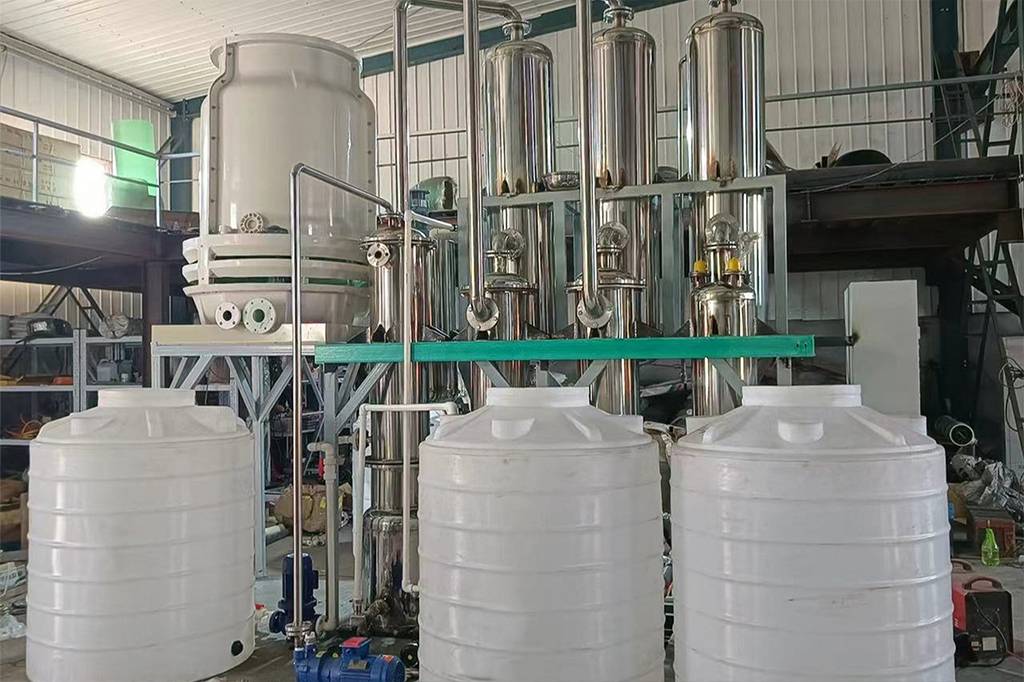
📌 Real Case: Whey Protein Concentration in an Indian Dairy Plant Serving Middle Eastern Markets
One of our clients—a large-scale dairy manufacturer based in India—needed an advanced system to concentrate sweet whey to over 18% total solids before spray drying. The concentrated whey was exported to Middle Eastern countries, where high-protein dairy powders are in strong demand.
Our Solution:
- A three-effect falling film evaporator system with vacuum stages
- Integration of thermal vapor recompression (TVR) for maximum steam savings
- Automatic CIP system to ensure hygienic operation
Results:
- Steam consumption reduced by over 40% compared to their older rising film evaporator
- Over 90% protein bioactivity preserved, verified by third-party lab analysis
- Downtime cut by 30%, thanks to smooth CIP process and no scorching issues
Falling film evaporators offer a precise, energy-efficient, and gentle concentration method for protein-rich liquids. Whether you’re processing dairy whey or plant-based alternatives, this technology ensures high product quality, low energy cost, and scalable operation for growing demand.
✅ Interested in a custom falling film evaporator for your protein production line?
Contact our team to discuss your material specs and receive a tailored solution with 3D layout and quote.