
In the highly regulated and quality-sensitive world of food processing, striking the right balance between operational efficiency and product integrity is critical. One of the key players in this balancing act is evaporator equipment—a vital component in concentrating, purifying, and stabilizing food products. But not all evaporators are equally suited for the job. The compatibility of an evaporator system with food-grade processes can directly impact product quality, energy efficiency, and long-term cost savings.
In this article, we’ll explore how modern evaporator equipment supports both quality control and efficient production in food processing—and why choosing the right system is essential for maintaining that delicate balance.
Why Evaporation Is Essential in Food Processing
Evaporation is commonly used to remove water from liquids such as fruit juices, milk, plant extracts, sauces, and syrups. The goal is to reduce volume for storage or transportation, enhance shelf life, or prepare the product for further processing like drying or crystallization.
The challenge? Achieving these outcomes without compromising texture, flavor, color, or nutritional content. That’s where precision-engineered evaporator equipment comes into play.
Common Applications of Evaporators in Food Industries
- Dairy Concentration – Condensed milk, whey, and cream require gentle evaporation to retain protein quality and prevent burning.
- Juice and Beverage Processing – Fruit juices and herbal teas are concentrated under vacuum to preserve color, taste, and vitamin content.
- Tomato Paste and Sauce Production – Forced circulation evaporators handle viscous liquids with suspended solids efficiently.
- Sugar Syrup and Sweetener Refinement – Falling film evaporators help maintain product clarity and prevent caramelization.
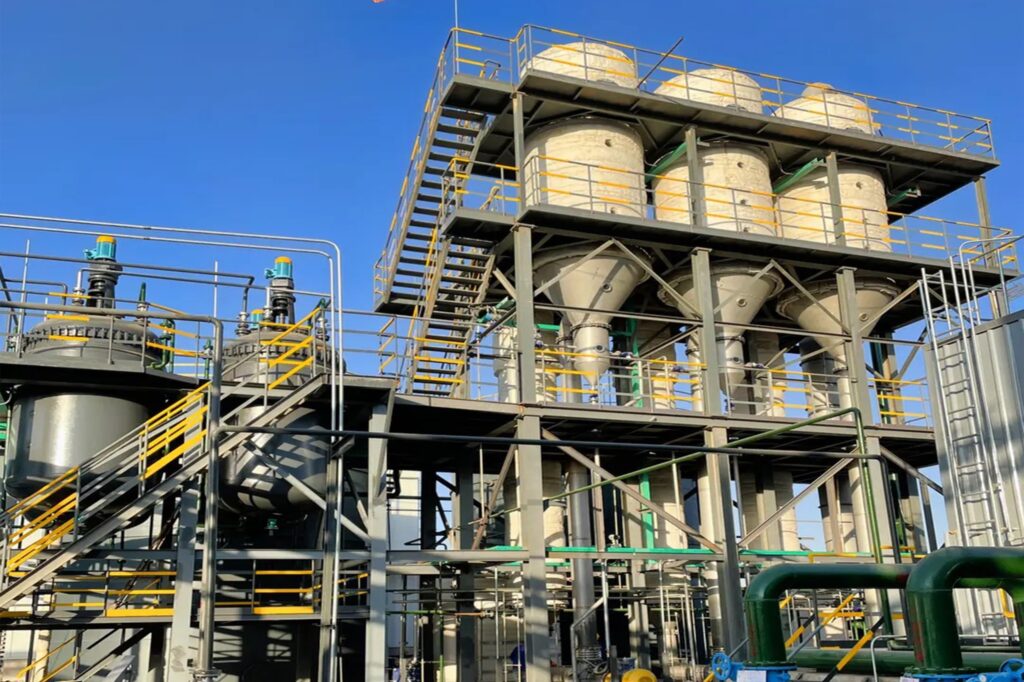
Compatibility Factors That Impact Food Quality
1. Temperature Sensitivity
High temperatures can destroy delicate nutrients and alter natural flavors. Vacuum evaporators operate at lower boiling points, reducing thermal degradation.
Best choice: Falling film or plate evaporators under vacuum—ideal for juice, dairy, and herbal extracts.
2. Material Selection and Hygienic Design
To meet food safety standards, evaporator equipment must be made from food-grade stainless steel (typically 316L), with electropolished surfaces that resist microbial growth.
- Welds must be smooth and crevice-free.
- All seals and gaskets should be FDA-approved.
- CIP (Clean-In-Place) and SIP (Sterilize-In-Place) systems are essential for hygiene compliance.
3. Product Consistency and Viscosity Handling
Food products come in a wide range of viscosities—from thin juices to thick sauces. A compatible evaporator system must maintain heat transfer performance regardless of consistency.
Solutions include:
- Agitated thin-film evaporators for sticky or fouling materials.
- Forced circulation units for higher-viscosity flows.
4. Automation and Process Control
To maintain product quality, evaporator systems must offer real-time control over temperature, vacuum level, and flow rate. Automated PLC systems reduce human error and ensure batch consistency.
Benefits:
- Reduced risk of scorching or overheating.
- Automated alarms and process logs improve traceability.
- Easy recipe switching for multi-product lines.
Balancing Efficiency Without Compromising Quality
While maintaining food safety and taste is non-negotiable, manufacturers must also manage operational costs. Modern evaporator equipment is designed to deliver both:
- Energy Efficiency:
Multi-effect evaporators and mechanical vapor recompression (MVR) systems reduce steam consumption by recycling thermal energy. - Water Recovery:
Condensate from the evaporation process can be collected and reused, lowering water bills and environmental impact. - Compact Design:
Skid-mounted units save space and reduce installation costs—ideal for facilities with limited floor area. - Scalability:
Modular setups allow processors to increase capacity without a full system overhaul.
Real Case Example
A fruit juice exporter in Latin America upgraded from a traditional single-effect evaporator to a three-effect falling-film system with automated vacuum control. Results after six months included:
- 35% reduction in steam consumption
- Improved vitamin retention in final product
- Shorter CIP cycles and lower water usage
- Consistency in product taste and appearance across batches
The investment paid for itself in under 18 months—while allowing the company to market its juice as “gently processed” with minimal nutrient loss.
How to Choose the Right Food-Compatible Evaporator
When selecting evaporator equipment for your food processing plant, consider the following checklist:
- ✅ Is the system designed for hygienic operation and easy cleaning?
- ✅ Does it support your product’s viscosity and thermal sensitivity?
- ✅ Can it scale with your production growth?
- ✅ Are there energy-saving features built in (multi-effect, MVR, etc.)?
- ✅ Does it offer integration with your existing automation systems?
Working with an experienced evaporator manufacturer that specializes in food-grade applications ensures your system meets both performance and regulatory requirements.
Looking to upgrade or design an evaporator system for your food production line? Contact us today to explore tailored solutions that balance quality and efficiency—without compromise.